
Let’s be honest for a moment.
A lot of business owners did not start their business to become the busiest, most stressed-out person in the company. Yet that is exactly where many end up. They are the decision-maker, the problem-solver, the team motivator, the salesperson, and the one who gets called whenever something goes wrong.
Does that sound familiar?
If it does, you are not alone. Many small and medium-sized business owners build a business that depends heavily on them. On the surface, it may look successful. Revenue is coming in. The team is busy. Customers are being served. But underneath it all, the business is fragile because too much rests on the owner’s shoulders.
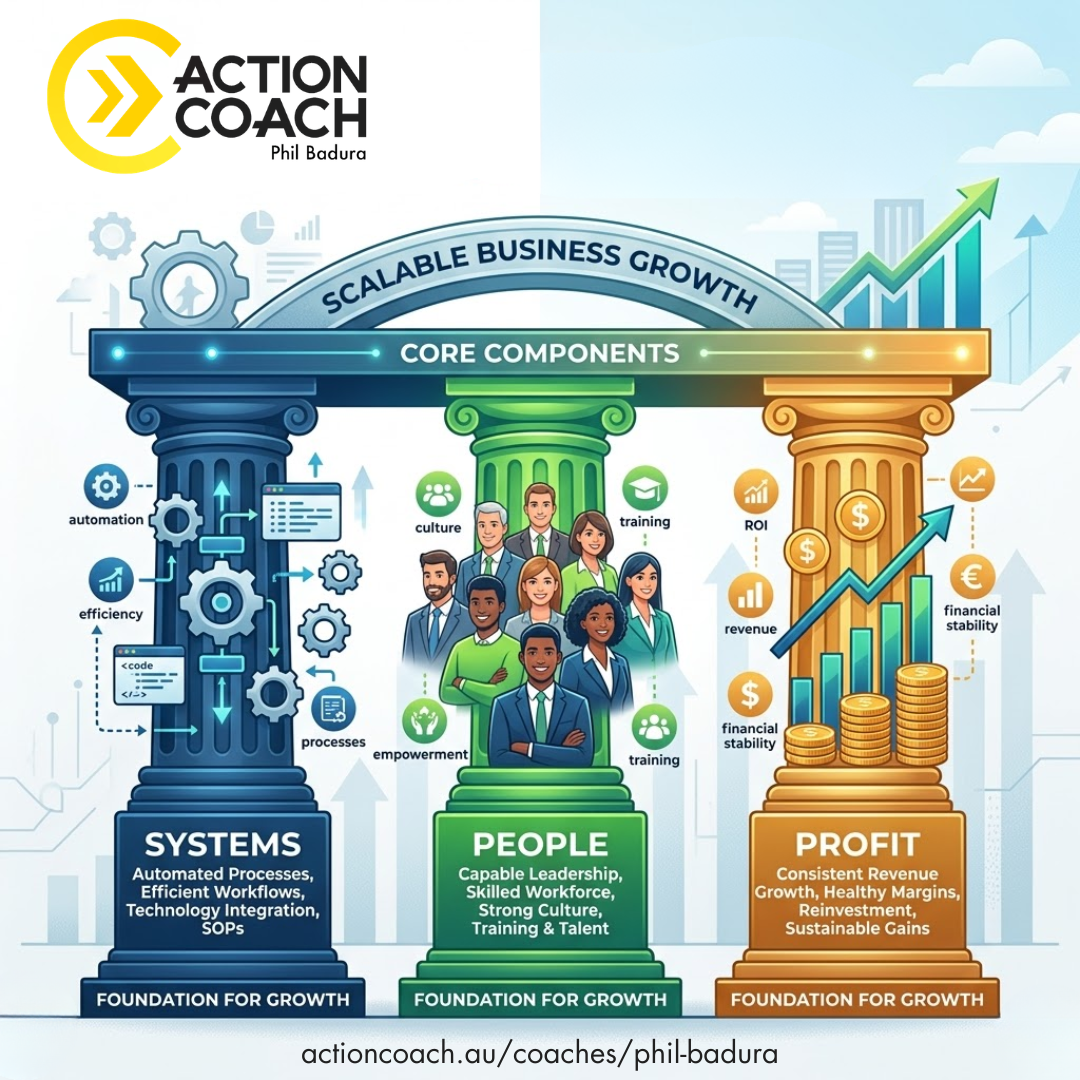
The real goal is not just to have a busy business. The goal is to build a business that is commercial, profitable, and scalable. A business that can grow without everything relying on you. A business that works because of strong systems, clear leadership, and the right team habits.
In this blog, we will walk through what that really means and how to move from owner-dependent chaos to a business that gives you more control, more profit, and more freedom.
What Does “Commercial, Profitable, Scalable” Really Mean?
These three words matter because they shape the kind of business you are building.
Commercial
A commercial business understands its market and knows how to create value that customers will pay for. It is not built on guesswork. It has a clear offer, a clear customer, and a clear reason why people choose it.
Profitable
A profitable business does more than generate sales. It keeps enough margin to reward the risk, effort, and investment involved in running it. Profit is not what is left over by chance. It should be planned for.
Scalable
A scalable business can grow without the owner having to work longer hours or solve every problem personally. It has systems, structure, and people in place so that growth does not create more chaos.
When you put these three together, you create a stronger business foundation. One that can grow, adapt, and perform without burning out the owner.
The Warning Signs Your Business Still Depends Too Much on You
Before you can fix the problem, you need to spot it.
Here are some common signs your business is too owner-dependent:
- Your team constantly comes to you for answers
- Things slow down when you take a day off
- You are involved in too many daily decisions
- Key processes live in your head, not in documented systems
- Profit feels inconsistent even when sales are strong
- Growth creates pressure instead of confidence
- You spend more time firefighting than planning
If several of those sound familiar, the issue is not that you are not working hard enough. The issue is that the business has not yet been built to function without you at the centre of everything.
That is fixable.
Why So Many Business Owners Get Stuck
Most business owners start out because they are good at what they do. They are a great tradie, technician, operator, consultant, or leader in their field. But building a business requires a shift.
You have to move from being the person who does the work to being the person who builds the machine.
That shift can be uncomfortable. It means letting go of control in some areas. It means teaching others. It means putting systems in place that create consistency. It means stepping back from some of the doing so you can focus on leading.
The truth is, if you stay buried in the daily work forever, your business growth will eventually hit a ceiling.
Step 1: Build a Business Model That Makes Commercial Sense
A business that works without you starts with a strong commercial model.
Ask yourself:
- Do we know exactly who our ideal customer is?
- Is our offer clear and easy to understand?
- Do we solve a real problem people are willing to pay for?
- Are we pricing based on value, not just fear of losing the sale?
- Do we know which products or services are most profitable?
Too many businesses are busy serving everyone, saying yes to everything, and making decisions based on short-term pressure instead of long-term strategy.
A commercial business gets clear on where the value is and focuses energy there.
That may mean refining your offer, reviewing your pricing, improving your sales process, or letting go of work that drains time without delivering enough return.
Step 2: Put Profit on Purpose
Profit should not be a lucky outcome.
If your business is working hard but not producing healthy margins, it is time to look deeper. Often, the issue is not just revenue. It is waste, poor pricing, low productivity, rework, lack of accountability, or unclear processes.
To improve profitability, focus on a few core questions:
Are your margins strong enough?
Know the real cost of delivering your product or service. Not the guessed version. The real version.
Are you tracking the right numbers?
Every business owner should know a few key figures. Revenue. Gross profit. Net profit. Cashflow. Labour efficiency. Customer value. These numbers tell the truth.
Where is money leaking?
Look for the hidden drains. Discounting too often. Poor stock control. Missed deadlines. Team inefficiency. Customer issues caused by inconsistent delivery.
Profit grows when the business becomes more disciplined. Better systems, clearer expectations, and tighter follow-through all help improve the bottom line.
Step 3: Create Systems That Make the Business Repeatable
If you want a business that works without you, systems are not optional.
Systems are what turn good intentions into consistent results.
They do not need to be complicated. In fact, the best systems are usually simple and practical. They show people how things are done, what good looks like, and what happens next.
Think about the key areas in your business:
- Sales follow-up
- Quoting
- Customer onboarding
- Job delivery
- Team communication
- Reporting
- Hiring and induction
- Handling customer issues
If these areas are inconsistent, it usually means the process is unclear.
Systems help your team perform with confidence. They reduce mistakes. They improve communication. They make training easier. And they stop everything from relying on the owner’s memory and availability.
A scalable business needs repeatable processes.
Step 4: Build a Team That Takes Responsibility
You do not build a business that works without you by simply stepping away. You build it by developing people who can step up.
That starts with clarity.
Your team needs to know:
- What is expected of them
- What outcomes they are responsible for
- How success is measured
- What decisions they can make without you
- How to communicate issues early
When team members lack clarity, they hesitate. When they hesitate, they come back to the owner. That creates bottlenecks.
Great leadership is not about having all the answers. It is about building a team that knows how to think, act, and take responsibility.
That means coaching your people, not rescuing them every time.
Step 5: Shift from Doing the Work to Leading the Business
This is the step many owners resist, but it is the one that changes everything.
If you want a scalable business, your role has to evolve.
You must spend less time reacting and more time leading.
That means working more on the business and less in it.
Your focus should move toward:
- Strategy
- Financial performance
- Team development
- Customer growth
- Process improvement
- Leadership
This does not happen overnight. It happens gradually, with intention. You build systems. You train your people. You define standards. You hold the team accountable. And bit by bit, the business becomes less dependent on you.
That is how control grows. Not by doing more, but by building better.
A Business That Works Without You Does Not Mean You Become Irrelevant
Let’s clear up a common misunderstanding.
Building a business that works without you does not mean the owner disappears. It means the business becomes stronger, healthier, and more stable because it is not reliant on one person for every outcome.
You still lead. You still shape the culture. You still make key decisions. But you are no longer the single point of failure.
That gives you options.
You can focus on growth. You can take time away without panic. You can mentor your leaders. You can improve profitability. You can build something valuable that has real long-term worth.
And that is the point.
Final Thoughts
A commercial, profitable, scalable business is not built by accident.
It is built through clarity, discipline, systems, leadership, and consistent action.
If your business currently feels too dependent on you, that does not mean you have failed. It simply means you have reached the next stage of growth. The stage where you stop being the centre of every decision and start building a business that can perform at a higher level.
That shift is where freedom starts.
Not freedom from responsibility, but freedom from being trapped in the day-to-day.
If you are ready to build a business that works without you, start by asking one simple question:
What in my business still depends too much on me?
The answer to that question will show you where to begin.
Join the Conversation
What is the biggest thing in your business that still depends too much on you right now?
Drop your thoughts in the comments. I read and respond because these conversations help business owners learn from each other, and chances are, if you are facing it, someone else is too.
If this blog was useful, share it with another business owner who is ready to move from chaos to control.